Wed Feb 11 2026
Admin
From Manual Processes to Intelligent Automation: Conversational AI in Banking
In a digital-first world, customers expect instant, accurate, and consistent responses across every channel. Yet many banks continue to rule this out and rely on manual processes to perform everyday tasks. This apprehension stems from high resource acquisition and training costs. This reliance on manual processes increases operational costs, creates friction within teams, and delays customer service.
As competition intensifies, these banks often face an important question: how can they modernize processes without compromising on security, compliance, and transparency?
The answer is simple: implementing conversation AI solutions.
At Maxinfocom, a leading AI development company, we integrate conversational AI into existing banking systems to redefine how they converse with a large number of customers.
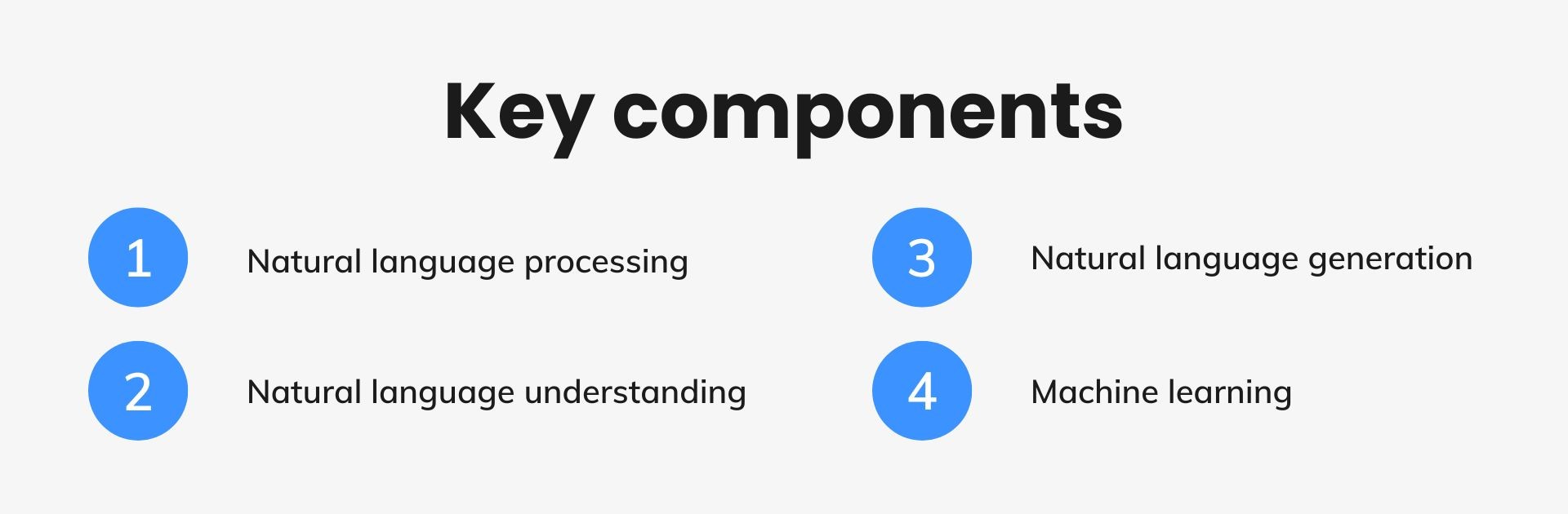
Conversational AI refers to technologies, like chatbots and virtual agents, that let computers understand, process, and respond to human text or voice inputs in a natural, conversational manner. It uses natural language processing (NLP), machine learning, and contextual awareness to simulate human-like interactions, offering 24/7, personalized support in customer service and daily tasks.
Banks that still rely on manual or semi-automated processes to handle daily operations create friction for their customers and internal teams.
Here’s a list of some common banking challenges due to manual processes:
- Inability to handle large customer query
Banks handle a large volume of customer queries on a regular basis. These vary from account balance queries to KYC updates and card-related issues. When these are handled manually, customer contact centers get heavily choked, leading to delays in issue resolution. What looks like a small event on the outside creates a ripple effect inside. Soon after, customer frustration and increased churn take over. This is where implementing a conversational AI can really be helpful. It can reduce customer waiting times by 80%*, cut unwanted operational costs by 20%*, and strengthen real-time fraud monitoring.
- Poor team efficiency
Handling repetitive tasks can feel monotonous. And monotony often leads to employee burnout because their potential ends up being wasted on unnecessary tasks. This is where implementing a conversational AI chatbot can truly help.
Integrating chatbots automates routine tasks and automatically summarizes calls, freeing customer service teams to focus on complex or high-value issues, which brings out efficiency and task accuracy. Therefore, by implementing AI as a "co-pilot" rather thanseeing it as a human replacement, fintech institutions can reduce an agent's effort by up to 87%*.
- Unwanted expenditure
Banks receive massive customer queries every day. And handling them requires hiring enough manpower. Looking closely into this pattern unearths the unwanted expenditures that hold down banks every day.
Hiring more agents requires more infrastructure and training costs. This is where a lot of banks miss a simple point, i.e., moving to a cost-efficient conversational AI chatbot process. While it may be argued that with conversational AI chatbots, initial investments are high, but AI-powered interactions can cost as little as $0.05–$0.15 compared to $0.50–$1.00+ for human-based agents.
Therefore, banks can reduce this unwanted expenditure by automating such manual tasks. This simple yet effective step reduces unwanted staffing costs while leaving room for team members to focus on important tasks. In fact, a major bank reported that when implemented, their AI chatbot saved up to 85%* of costs when compared to hiring traditional agents.
- Receiving unclean data
Banking institutions that rely on fragmented or unclean data often suffer from inconsistent customer records, limited customer behavior visibility, and bad decision-making due to the absence of correct data. And without clean, structured data, these banks often struggle to deliver a personalized customer experience.
This is where AI interaction can help by generating insights about customer behavior and needs. The provision of clean, structured data helps analyze user intent and sentiment during customer service interactions, ensuring better customer service. It also helps financial institutions offer better products and refine marketing strategies, helping these institutions evolve their business structure in the long run!
- Inability to be a market differentiator
Most banks offer similar products. What truly sets them apart is the customer service experience. So when banks rely blindly on manual processes, it makes it difficult for them to compete with those offering 24*7 service. Chasing this old strategy leads to unmet customer expectations, making them quickly move on to those offering better services. In situations like these, integrating a conversational AI chatbot can definitely help you.
Conversational AI chatbots enhance banking services by providing instant responses, reducing waiting times, and offering personalized options. Now personalization can be as simple as sending instant responses to checking credit scores, managing savings, or providing investment guidance. In an industry that demands fast customer service, offering this kind of digital experience can truly create a market differentiation.
Conversational AI provides multiple benefits to banks. Here’s a list of use cases ranked by how commonly they are used in banks.
- 24*7 Customer Support
Conversational AI chatbots are best at handling daily customer interactions such as checking account balances, sharing product information, or retrieving transaction history. By automating these queries, banks can reduce response delays and improve customer satisfaction.
However, not all banking interactions are simple. When conversations involve complexity or emotional sensitivity, conversational AI chatbots rely on de-escalation by human experts. As a result, conversational AI is not designed to replace humans but to make them work better.
- Self Account Management
Conversational AI chatbot supports account management. It shares real-time account balance, transaction history, and even alerts when the balance is low. This contextual awareness supports intelligent account management while cross-selling relevant opportunities without feeling intrusive.
- Smooth Customer Onboarding
Traditionally, customer onboarding has been a friction point for most banks.
Conversational AI is changing this by guiding new customers with account creation, verification, and its usage. A well-designed AI connects to backend systems, gathers required information, triggers activation workflows, and organizes the entire onboarding process. It's interesting to notice what once took hours or days can now happen in a few minutes without the need for a physical branch visit.
- Intelligent Agent Assistance
Conversational AI can help human agents, too!
During a call or chat, the AI listens, transcribes, and answers in real-time. It also gathers context before handing calls to a human agent. This arrangement makes agents more effective, reduces handling time, and helps ensure consistency.
- Payment Processing & Loan Reminders
Payment processing is another area where AI is dramatically improving customer experience. Conversational AI systems proactively send reminders about upcoming payments. It also helps process payment directly during the conversation without redirecting the user to another screen or platform.
Loan applications see a similar benefit. AI can guide applicants through the entire application process, provide regular status updates, and reduce delay at every step.
Processes that once took weeks can now be completed in days or even hours.
- Unique Product Recommendations
Personalized product recommendation is another use of AI in banking. These systems analyze customer transactions, identify items to cross-sell, and create detailed financial behavior profiles. By understanding individual financial needs, preferences, and life stages, AI systems can truly suggest relevant products.
A U.K.-based retail bank wanted to improve customer engagement while reducing operational load on its customer service center.
We addressed this by implementing a conversational AI solution across its web and mobile banking. This integration was designed to automate voluminous customer interactions while maintaining strict compliance standards.
Our solution proactively sent payment reminders to customers and helped them complete payments directly within the chat interface. This seamless interaction reduced customer friction and drop-offs significantly.
Another area where our conversational AI chatbot proved competent was transforming the loan application process. AI guided customers to independently go through eligibility checks, submit documents, and track their application in real time.
Within a few months of implementation, our client saw a substantial trickle down in unwanted calls, shorter loan processing timelines, and better customer satisfaction.
Banks often run aground when implementing conversational AI into their existing system.
You can get the most value by avoiding these common mistakes and following best practices that make the system more accurate and easier for customers to use.
- Identifying Proper Use Cases
Implementing a conversational AI chatbot in banking requires a strategic approach. This includes figuring out the highest resource drainer versus the lowest use case. The high drainer is where conversational AI will have the most impact in the shortest timeframe. Once deployed for one use case, you can then scale it for continuous earning and evolving.
- Map the Process
Before any implementation, it’s important to have your business processes mapped end-to-end. This will increase the ability of the chatbot to truly integrate with other systems and provide effective service. This includes integration with the bank’s existing security and verification tools, data, and regulatory control systems.
- Plan for Human Intervention
Conversational AI is designed to handle repetitive processes well. But in instances where transitions are complex, human intervention is required. A well-structured framework ensures good customer service while maintaining trust, accuracy, and compliance.
- Regular Data Training
Conversational AI deals with a large amount of data on a regular basis. Therefore, regularly cleaning and updating training data ensures accuracy while allowing AI to adapt to evolving customer intents.
In the coming years- implementation of AI is set to support growth in the banking sector. It is already facilitating customized customer responses, providing reliable product recommendations, and gaining trust through expanded concierge services.
The challenge is that implementing conversational AI chatbots in banks often faces significant hurdles. These are primarily related to data security and compliance. Working on these blockers by prioritizing robust AI governance and better data security can help banks overcome these challenges in the long run.
So if you are working in a financial institution and are looking for an expert who understands how to navigate these challenges, Maxinfocom can surely help you.
With our decade of experience in offering customized AI solutions across several domains, Maxinfocom-a US based AI ML development company—can help by building scalable solutions that are aligned with real-world use cases.
So what are you waiting for? Connect with our experts right away to explore how a conversational AI chatbot can be the torch bearer of your digital transformation.

- What is the difference between a chatbot and conversational AI?
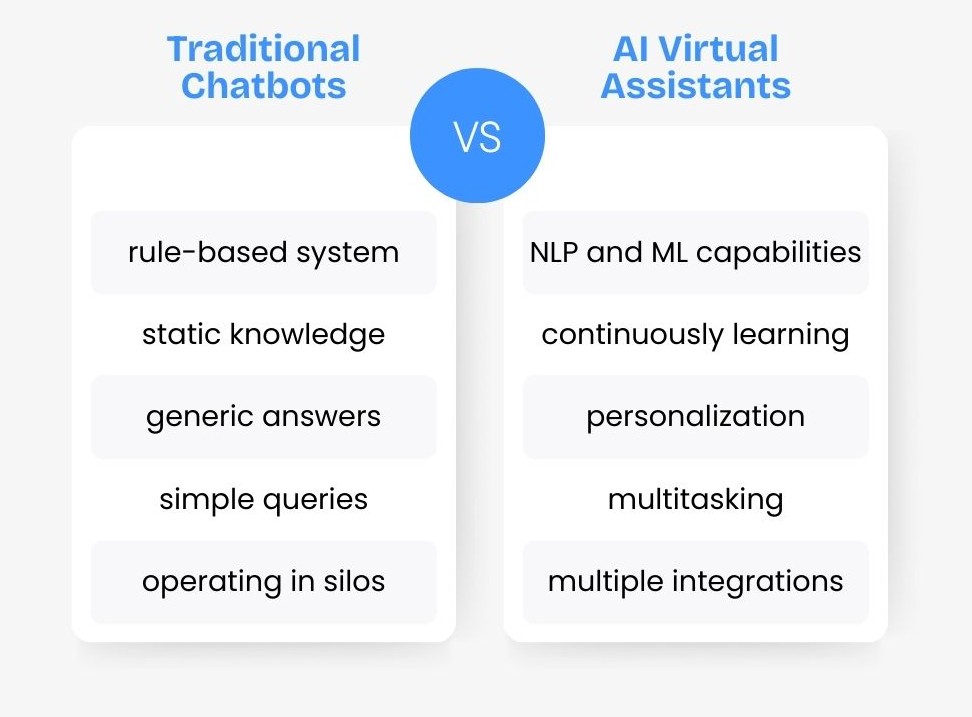
Traditionally, chatbots operate on pre-programmed rules to provide standard responses to customer queries. However, conversational AI uses natural language processing to interpret text and engage with customer queries appropriately.
- How does conversational AI improve customer service in banking?
Conversational AI improves banking processes by catering to some common challenges. These include decreasing customer wait times, improving user outcomes, and providing personalized services as per user needs.
- Does conversational AI require ongoing monitoring after deployment?
Financial institutions go through updates regularly. We monitor our solutions on a regular basis to ensure they align with current policies.
- When is it appropriate to implement conversational AI tools in banks?
Banks usually assess their channel demand to determine when to implement a conversational AI chatbot to assist with everyday challenges.